

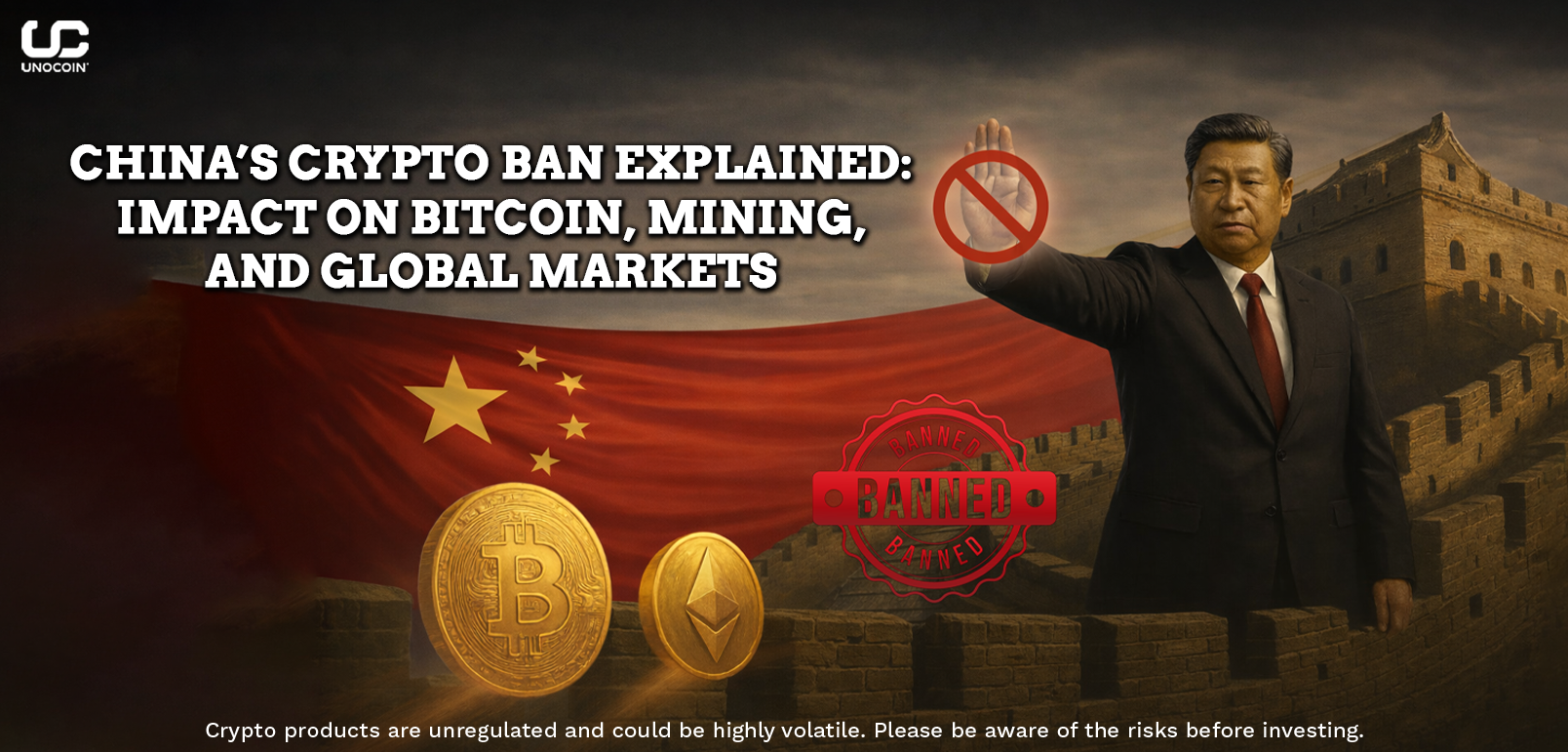
China has played a critical role in Bitcoin’s history, from hosting the majority of mining operations to driving significant trading volumes. However, the country’s sweeping bans on cryptocurrency trading and mining, which began intensifying in 2021 and continued through 2026, have reshaped the global crypto landscape. These restrictions are not solely about environmental concerns but reflect broader economic and strategic objectives.
Why China Banned Cryptocurrency
The primary reason behind China’s crypto ban is capital control. Cryptocurrencies allow users to transfer wealth across borders without relying on traditional banking systems. This created challenges for China, which maintains strict controls on capital outflows to protect its financial system and currency stability.
By restricting cryptocurrency trading and mining, China aims to prevent capital flight and maintain control over its monetary policy. Additionally, the government is promoting its own Central Bank Digital Currency (CBDC), the digital yuan (e-CNY), as a state-controlled alternative to decentralized cryptocurrencies.
China’s regulatory approach also aligns with its broader effort to reduce speculative financial activity and ensure that financial systems remain under government oversight. Decentralized assets like Bitcoin operate outside central authority, which conflicts with China’s financial governance model.
Impact on Bitcoin Price and Market Stability
Historically, China’s crypto bans have triggered short-term volatility in Bitcoin’s price. Major announcements often caused sudden declines due to market uncertainty and panic selling. However, these dips have consistently been followed by strong recoveries.
Over time, Bitcoin has become more resilient to regulatory actions in any single country. The global nature of the Bitcoin network ensures that restrictions in one region do not affect the overall functionality or long-term adoption of the asset.
In fact, China’s ban has accelerated Bitcoin’s decentralization by reducing reliance on a single country’s market activity. Bitcoin adoption continues to expand across North America, Europe, Latin America, and emerging economies.
The Great Mining Migration
One of the most significant consequences of China’s ban was the “Great Mining Migration” of 2021. Mining operations relocated to countries such as the United States, Kazakhstan, Russia, and Canada, where energy resources and regulatory conditions were more favorable.
This migration strengthened the decentralization and security of the Bitcoin network. By spreading mining activity across multiple countries, Bitcoin became less vulnerable to regional disruptions.
Interestingly, reports suggest that some mining activity has quietly resumed within China using smaller, decentralized operations powered by stranded or low-cost energy sources. This reflects the adaptability of the mining industry and the continued economic incentives associated with Bitcoin mining.
Impact on the Global Crypto Market
China’s exit from the crypto trading and mining sector has accelerated the rise of regulated crypto markets in other regions. Institutional adoption has grown rapidly, supported by regulated exchanges, financial products, and Bitcoin ETFs.
The shift has also reinforced Bitcoin’s position as a global asset independent of any single government or economy. Instead of weakening Bitcoin, China’s restrictions have strengthened its decentralization and global adoption.
At the same time, China continues to promote the digital yuan, which allows the government to maintain full control over digital financial transactions.
Conclusion
China’s cryptocurrency ban represents a significant shift in the global crypto landscape, but it has not stopped Bitcoin’s growth. While short-term volatility may occur following regulatory announcements, the long-term impact has been increased decentralization, stronger global adoption, and reduced reliance on any single country.
For Unocoin users and investors, this highlights Bitcoin’s resilience and reinforces its role as a truly global, decentralized digital asset.
Please find the list of authentic Unocoin accounts for all your queries below:
- Twitter: https://twitter.com/Unocoin
- Instagram: https://www.instagram.com/unocoin/
- Facebook: https://www.facebook.com/unocoin/
- LinkedIn: https://in.linkedin.com/company/unocoin
- YouTube Channel: https://www.youtube.com/c/Unocoin/videos
- Newsletter: https://medium.com/subscribe/@Unocoin_growth
- Blogs: https://blog.unocoin.com
- Telegram Group: https://t.me/Unocoin_Group
- Telegram Channel: https://t.me/+fasQhTKBsfA5N2Zl
- Telegram: https://t.me/UnocoinSupport_Bot
- E-mail id: [email protected]
- Contact details: 7788978910 (09:30 AM IST – 06:30 PM, Mon-Sat)
- App store link: https://apps.apple.com/in/app/unocoin-indian-crypto-exchange/id1030422972
- Playstore link: https://play.google.com/store/apps/details?id=com.unocoin.unocoinwallet
Disclaimer: Crypto products are unregulated as of this date in India. They could be highly volatile. At Unocoin, we understand that there is a need to protect consumer interests, as this form of trading and investment has risks that consumers may not be aware of. To ensure that consumers who deal in crypto products are not misled, they are advised to DYOR (Do Your Own Research).