

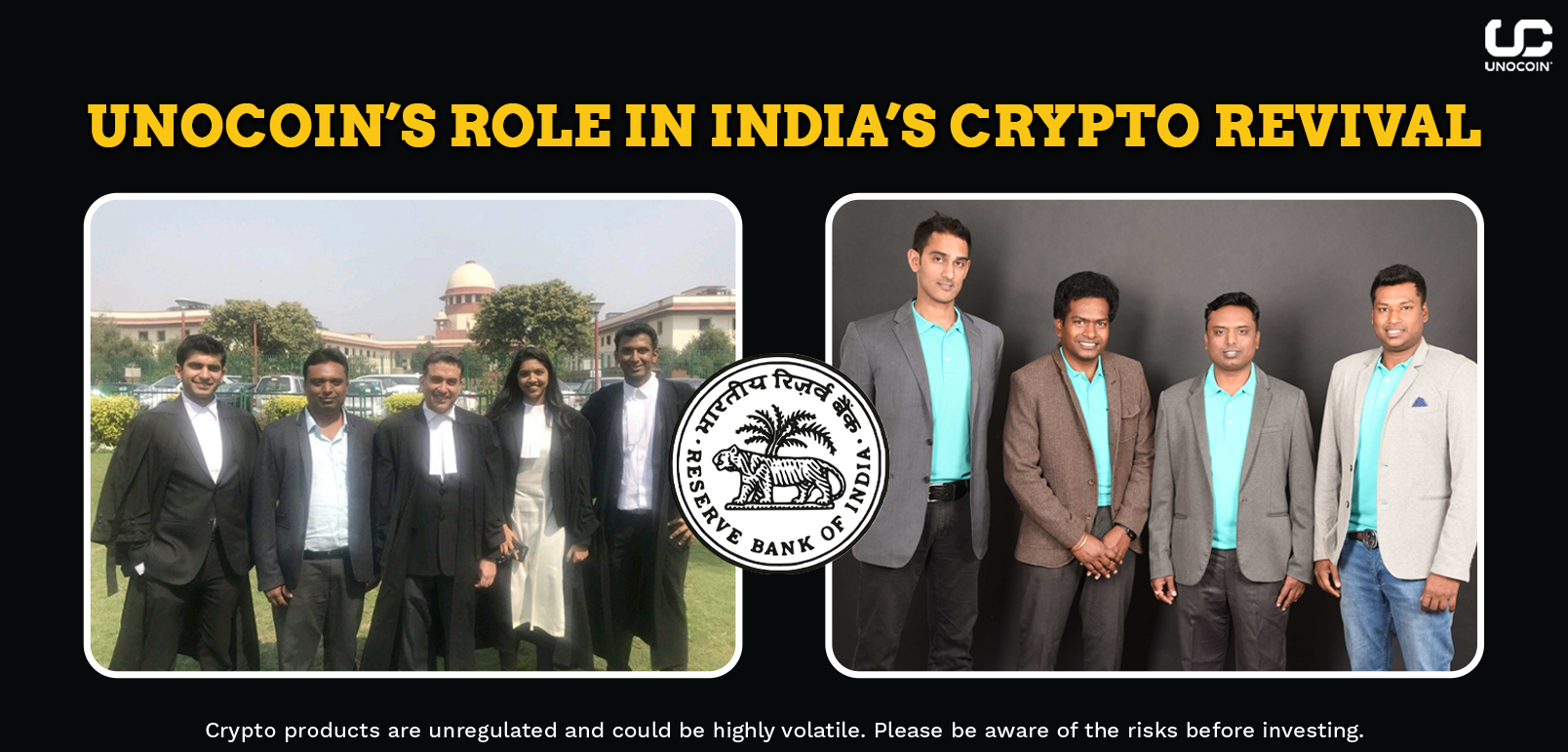
The Judgment That Changed Crypto in India
On 4 March 2020, India witnessed one of the most important legal decisions in the history of digital assets. The Supreme Court of India set aside the Reserve Bank of India’s circular that had prevented banks from providing services to cryptocurrency businesses.
The ruling didn’t just reopen bank access for exchanges — it revived an entire industry that had been pushed to the brink.
For India’s crypto entrepreneurs, builders, and investors, the judgment was more than a legal victory. It was a moment that reaffirmed a powerful idea: Innovation deserves a fair chance.
The 2018 RBI Ban That Shook the Industry
To understand why the ruling mattered, we must go back to April 2018.
The Reserve Bank of India issued a circular directing banks to stop providing services to businesses dealing with cryptocurrencies. While the circular did not ban crypto ownership, it cut off banking access to exchanges and startups, effectively crippling the industry.
The consequences were immediate:
-
Several exchanges shut down operations
-
Thousands of investors struggled to access their funds
-
Startups pivoted or left the market
-
Innovation in blockchain slowed dramatically
For many observers, it looked like the end of crypto in India. But a small group of entrepreneurs and advocates refused to give up.
The Legal Battle That Followed
The fight against the RBI circular was led by the Internet and Mobile Association of India (IAMAI), representing multiple digital businesses in the country.
IAMAI challenged the RBI directive before the Supreme Court, arguing that the banking restriction was disproportionate and harmful to innovation. The hearings lasted several months, and the case became a defining moment for India’s emerging digital asset sector.
Behind the scenes, several individuals worked tirelessly to ensure that the industry’s voice was heard.
Among them were:
-
Harish B. V., co-founder of Unocoin
-
Ashim Sood, standing counsel
-
Danish, who covered developments in real time
Their efforts helped bring the case to national attention and ensured that the technological and economic implications of crypto were properly understood.
The Historic Supreme Court Verdict
On 4 March 2020, the Supreme Court delivered its verdict. The court struck down the RBI circular, declaring that the restriction on banking services for cryptocurrency businesses was unconstitutional.
The ruling immediately changed the trajectory of the industry. Within hours, Indian exchanges resumed operations with banking services, allowing investors to deposit and withdraw funds again.
The impact was enormous:
-
Crypto exchanges restarted INR deposits and withdrawals
-
Investor confidence returned
-
Blockchain startups began rebuilding
-
India re-entered the global crypto ecosystem
The judgment effectively restarted the Indian crypto economy.
Unocoin’s Role During the Crisis
Founded in 2013, Unocoin was among the earliest cryptocurrency companies in India and had already spent years building infrastructure for Bitcoin adoption.
When the 2018 banking restrictions hit, the company faced the same challenges as the rest of the industry:
-
Loss of fiat banking channels
-
Operational disruptions
-
Market uncertainty
Despite these challenges, Unocoin remained committed to supporting the broader crypto ecosystem.
Co-founder Harish B. V. actively participated in the legal and industry efforts to challenge the RBI circular, helping ensure that the concerns of crypto companies and users were represented during the proceedings.
The company continued working toward its mission: Making cryptocurrency accessible to Indians.
The Revival of India’s Crypto Ecosystem
After the Supreme Court ruling, the industry experienced rapid revival.
Crypto adoption accelerated across the country:
-
Exchanges resumed full operations
-
New startups entered the blockchain space
-
Venture capital interest increased
-
Millions of new users joined the crypto economy
India quickly became one of the fastest-growing crypto markets globally.
Platforms like Unocoin played a critical role by providing:
-
Secure trading infrastructure
-
Crypto wallets and payment services
-
Educational resources for new investors
These developments helped rebuild trust and bring digital assets back into mainstream financial discussions.
A New Era of Legal and Regulatory Progress
The story didn’t end with the 2020 verdict. India’s crypto landscape continues to evolve. Recent legal developments are gradually bringing more clarity to digital assets.
For example, the Madras High Court recently recognized cryptocurrency as a form of “property”, acknowledging that digital assets can be owned, transferred, and legally protected.
This recognition represents an important step toward:
-
Legal clarity for investors
-
Institutional adoption
-
A stronger regulatory framework
While cryptocurrencies are still not considered legal tender in India, they are increasingly being treated as legitimate digital assets within the financial system.
The Road Ahead for Crypto in India
India today stands at an important crossroads.
The country has:
-
One of the world’s largest populations of crypto users
-
A thriving startup ecosystem
-
Growing institutional interest in blockchain technology
At the same time, policymakers continue working on regulatory frameworks to balance innovation, investor protection, and financial stability.
The outcome of these discussions will shape the next chapter of India’s digital asset economy.
Unocoin’s Continuing Mission
For over a decade, Unocoin has been part of India’s crypto journey — from the early days of Bitcoin adoption to the legal battles that shaped the industry.
The company’s mission remains clear: To make cryptocurrency accessible, secure, and useful for millions of Indians.
Through innovation, education, and reliable infrastructure, Unocoin continues to support the growth of India’s digital asset ecosystem.
A Moment That Will Always Be Remembered
The Supreme Court verdict of 4 March 2020 will always remain a defining milestone in India’s crypto history.
It demonstrated that:
-
Technology cannot be stopped by uncertainty
-
Innovation thrives when given a fair chance
-
Legal institutions can play a key role in protecting emerging industries
What once seemed like the end of crypto in India ultimately became the beginning of a new era.
And the story of India’s digital asset revolution is still being written.
Please find the list of authentic Unocoin accounts for all your queries below:
Twitter: https://twitter.com/Unocoin
Telegram Group: https://t.me/Unocoin_Group
Telegram Channel: https://t.me/+fasQhTKBsfA5N2Zl
E-mail id: [email protected]
Other links: linktr.ee/unocoin
Contact details: 7788978910 (09:30 AM IST – 06:30 PM, Mon-Sat)
App store link: https://apps.apple.com/us/app/unocoin/id1030422972?ls=1
Playstore link: https://play.google.com/store/apps/details?id=com.unocoin.unocoinwallet
Disclaimer: Crypto products are unregulated as of this date in India. They could be highly volatile. At Unocoin, we understand that there is a need to protect consumer interests as this form of trading and investment has risks that consumers may not be aware of. To ensure that consumers who deal in crypto products are not misled, they are advised to DYOR (Do Your Own Research).