
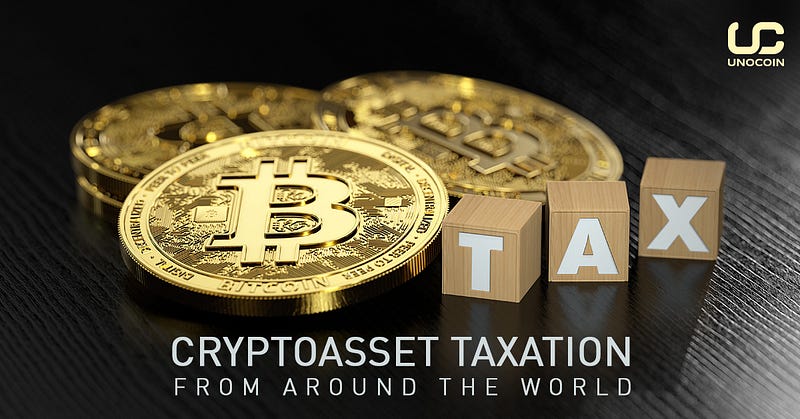
After a certain limit, tax speculations are inevitable with every penny you earn. No matter whether it is regular cash or cryptoasset, there are always guidelines; except the system varies with the countries. Concrete regulations are not yet established in every country; so there remains a scope of tax evasion, utilizing the confusion one way or another. The issue arises from the fact that there is no universally accepted classification of cryptoasset as capital asset, foreign asset, etcetera.
Here we discuss both the clearly-mentioned and open-to-interpretation cases with examples from around the globe. An outline of the rules and their differences are provided below.
1. Cryptoasset Taxes: United States of America
Crypto is declared as property for U.S. federal tax purposes. The Internal Revenue Service (IRS) treats virtual asset payments as a “sale”. If the gain is capital in nature, it is included in computing gross income. Thus it becomes subject to the Net Investment Income Tax (3.8%) after the certain limit. Individual “mining” is under the self-employment domain. Standard rules apply if cryptoasset is received as remuneration for the employee.
However, even for international transactions, cryptoasset does not account for any foreign currency rise or fall.
2. Cryptoasset Taxes: Australia
The Australian Taxation Office (ATO) prescribes record-keeping for virtual asset transactions. The details of the dealings include date, Australian Dollar equivalent, and the information of involved parties.
If the amount is less than $10000, there is no taxation on crypto trades for an individual. For business, the taxation is subject to the capital gains category. For remuneration, it is considered as normal salary unless one has a valid salary sacrifice agreement. With the agreement, the Fringe Benefits Tax Assessment Act will come into play. Mining activity comes under assessable income, while as a business it is taxable as trading stock.
3. Cryptoasset Taxes: United Kingdom
Her Majesty’s Revenue & Customs (HMRC) excludes crypto mining from the VAT, as obviously, the economic activity is not visible. HMRC states that for every activity involving crypto, the specific cases and circumstances will be considered for taxation under either Corporation Tax (CT), Income Tax (IT) and Capital Gains Tax (CGT), or for exemption if the case is so.
4. Cryptoasset Taxes: Japan
From 2017, Japan considers Bitcoin as an official method of payment. The National Tax Agency of Japan keeps specific declarations on crypto grounds. The individual investment or sales of cryptoasset are associated with capital gains, while the Business income is classified as miscellaneous. Barter Exchanges rules apply to trades with assets.
5. Tax Exemption: Special Cases
Belarus, Denmark, Germany, Singapore, South Korea, Slovenia are the countries where you can lawfully evade taxes on Bitcoins. The rules have been generous here to leave the extra tax pressure. They do not consider cryptoassets as commodities or assets; although, in some places like Slovenia, Crypto-businesses come under taxation. However, the individual investors get away as the liberal laws do not regard crypto-earnings as real capital gains.
These countries have a clear legal statement on the crypto-tax rules, but there are some other countries where unofficially Bitcoin is tax-free because of the all-inclusive capital gains tax exemption system. Notable examples include Hong Kong, Malaysia, Mauritius, Barbados, Switzerland, New Zealand etc.
The rules are undefined for most of the places, and thus; ever evolving. Definitions are changing and so are the policies. Just a few months back France classified Cryptoasset as “movable property”.Because of this, the tax rates came down straight to 19% from 45%. India is yet to decide whether to apply GST/IGST on crypto or not. Although the Central Board of Indirect Taxes and Custom is currently considering an 18%, which, if passed, shall be proposed before Goods and Service Tax Council.
Also Read:
https://blog.unocoin.com/ethereum-takes-on-1000-dapps-3ed705de1672